HB-3000C Touch Screen Electronic Brinell Hardness Tester (10-Level Force, 8-Inch Touch Screen)
Hardness Testers
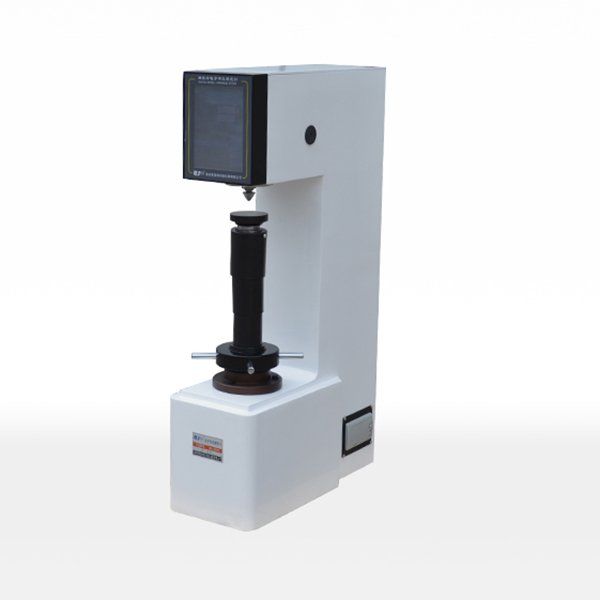
Overview
The HB-3000C is an electronic Brinell hardness tester with an 8-inch touch screen. It is used mainly for the hardness determination of cast iron, steel, non-ferrous metals and soft alloys, and it can also be used for some non-metallic materials such as hard plastics and bakelite. It is suited to factories, workshops, laboratories, universities and scientific research institutions because the test is automated and the reading is taken from a large screen.
The traditional loading weights have been removed and replaced by an electronic automatic loading system with a fully automatic closed-loop force sensor control system, giving ten levels of test force, a wider testing range and higher precision. The test process is automated so that human error is reduced, and the Brinell hardness value is displayed directly, which makes the machine quick to use in a busy workshop as well as accurate in a laboratory.
Technical Specifications
| Parameter | Value |
|---|---|
| Display | 8-inch LCD touch screen with intelligent menu prompts |
| Loading system | Electronic automatic loading, fully automatic closed-loop force sensor control (loading weights removed) |
| Test force levels | 10-level test force selection, 14-level test scale |
| Brinell scales | HBW2.5/62.5, HBW2.5/187.5, HBW5/125, HBW5/750, HBW10/100, HBW10/1500, HBW10/3000, HBW10/250, HBW10/500, HBW10/1000 |
| Test force | 62.5 kgf (612.9 N), 100 kgf (980.7 N), 125 kgf (1226 N), 187.5 kgf (1839 N), 250 kgf (2452 N), 500 kgf (4903 N), 750 kgf (7355 N), 1000 kgf (9807 N), 1500 kgf (14710 N), 3000 kgf (29420 N) |
| Hardness test range | 8 – 650 HBW |
| Maximum height of test piece | 280 mm |
| Smallest unit of measurement | 0.005 mm |
| Dwell time | 5 – 60 s |
| Total magnification | 20X |
| Distance from the centre of the indenter to the body | 150 mm |
| Standards | EN, ISO 6507, EN ISO 6506, ASTM E-384, ASTM E-10-08, ASTM E-384, GB/T 231.2, JJG 150 |
| Power supply | AC 220 V +5 %, 50-60 Hz |
| Dimensions | 550 × 236 × 750 mm |
| Host weight | 123 kg |
| Standard configuration | Large flat test bench × 1; small flat test bench × 1; V-type test bench × 1; tungsten carbide ball indenters φ10 / φ5 / φ2.5 mm (one each); standard Brinell hardness blocks × 2 |
| Optional | Square workbench 400 × 150 × 30 mm; Brinell video measurement system; CCD Brinell image processing system |
Electronic loading and closed-loop force control
Removing the loading weights and replacing them with an electronic automatic loading system changes the way the test force is applied. The force sensor closes the loop automatically, so the selected force is applied consistently and the operator does not handle weights between tests. With ten levels of test force and fourteen scales, one machine covers soft metals and hard steels, and the wider range means that a single instrument can replace several fixed-force testers on a laboratory bench.
Setting, measuring and reading
The test cycle is automatic and the hardness value is shown on the 8-inch LCD touch screen, with intelligent menu prompts guiding the operator through the setting. The measuring system uses a high-precision reading microscope with a smallest unit of measurement of 0.005 mm and a total magnification of 20X, and the dwell time can be set from 5 to 60 seconds. Because the process is automated, the result does not depend on the operator’s timing, and the machine is described as strong, accurate, reliable and durable with high testing efficiency.
Applications and configuration
The HB-3000C is used for the determination of Brinell hardness on ferrous metals, non-ferrous metals and bearing alloy materials, and it is especially suitable for the precision measurement of parallel planes. The standard delivery includes large and small flat test benches, a V-type test bench for round parts, tungsten-carbide ball indenters of φ10, φ5 and φ2.5 mm, and two standard hardness blocks. A square workbench, a Brinell video measurement system and a CCD Brinell image processing system are available as options for customers who want to record or digitally measure the impression.
Frequently Asked Questions
What materials can the HB-3000C test?
It is mainly used for the hardness determination of cast iron, steel, non-ferrous metals and soft alloys, and it can also be used for some non-metallic materials such as hard plastics and bakelite.
How many test forces and scales does it provide?
It has ten levels of test force and fourteen scales, from 62.5 kgf up to 3000 kgf, with a hardness test range of 8 to 650 HBW.
How is the hardness value read?
The test process is automated and the Brinell hardness value is displayed on the 8-inch LCD touch screen, with intelligent menu prompts; the reading microscope has a smallest unit of measurement of 0.005 mm and a total magnification of 20X.
Which standards does it comply with?
The machine follows EN ISO 6506, ASTM E10, GSM E-384 and GB/T 231.2, together with ISO 6507, ASTM E-384 and JJG 150 in its standard list.
What is in the standard delivery and what is optional?
The standard delivery includes large and small flat test benches, a V-type test bench, φ10 / φ5 / φ2.5 mm tungsten-carbide ball indenters and two standard Brinell hardness blocks; a square workbench, a Brinell video measurement system and a CCD Brinell image processing system are optional.
Related Products & Pages
- Hardness Testers
- HB-3000B Brinell Hardness Tester
- HBS-3000 Digital Display Brinell Hardness Tester
- Metal Testing Machines
About CHENJI & Support
CHENJI is the brand of Jinan Chenji International Trade Co., Ltd. (Shandong, China), a manufacturer and exporter of material testing machines since 2014, with in-house quality control plus third-party inspection by SGS or Bureau Veritas. The company holds ISO 9001 certification (626024QH073R1) and is a Bureau Veritas audited supplier (MIC-ASR2451820). Testing machines are normally supplied with a calibration certificate valid for 12 months and traceable to national force standards, and our engineers help you select the machine, fixtures and accessories for your specimen and method.
Every quotation is prepared against the standard you test to, so the delivered machine matches the test method rather than only the headline capacity. Spare parts, consumables and calibration support are available after delivery, and machines can be produced to OEM or ODM requirements when a customer drawing or specification is provided.
Selecting and Verifying a Testing Machine
Choosing a machine is a matter of matching capacity to the specimen and the method, not of buying the largest frame. A 1000 kN machine is not suitable for a sample that needs 1 N of force; capacity selection follows the specimen and the standard, and the force measuring system should be verified per ISO 7500-1 or ASTM E4 on a regular schedule. Load cells are commonly supplied as class 0.5 or class 1, which means the indicated force stays within ±0.5% or ±1% of the true force.
Test results are only comparable when they are quoted together with the standard, the specimen geometry, the test speed and the force measurement class. We are glad to review your test method and specimen so that the machine, fixtures and accessories are correctly specified before you order.
Request a Quotation
Tell CHENJI the materials, the specimen size and the Brinell scale you use, and we will confirm the HB-3000C touch screen Brinell hardness tester, indenters, test benches and hardness blocks for a quotation.
Email annie@chenjitester.com or call / WhatsApp +86 158 5311 1612.