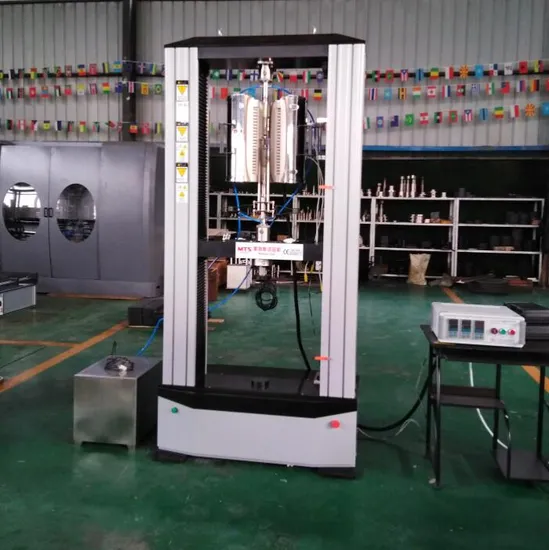
Rubber Fatigue Testing Machine (Rubber Flexing Fatigue Tester)
Fatigue Testing Machines
Overview
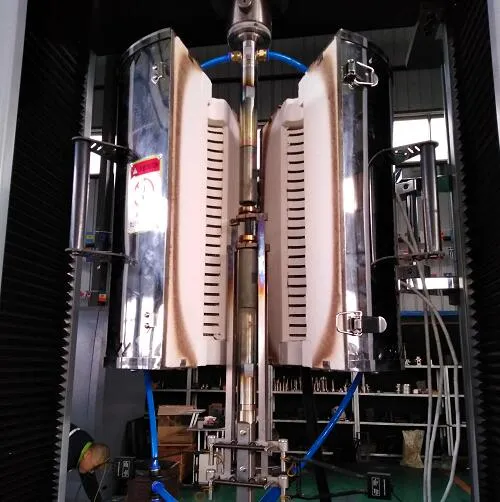
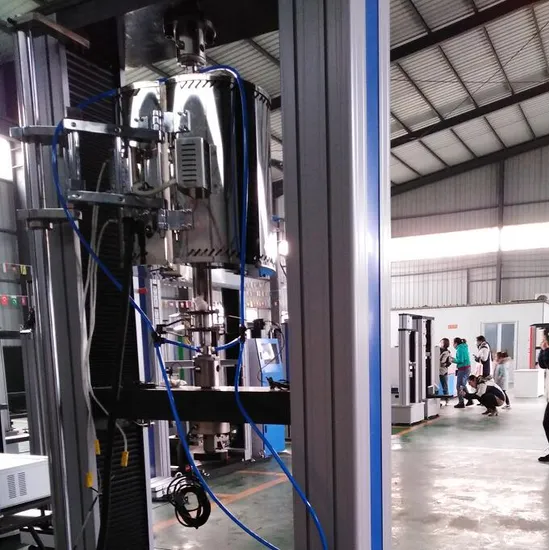
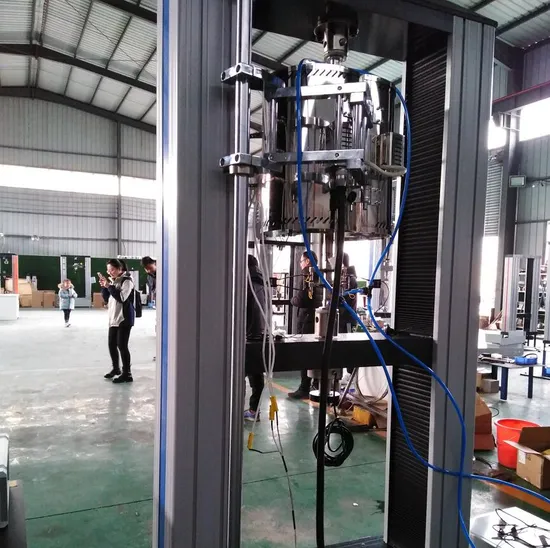
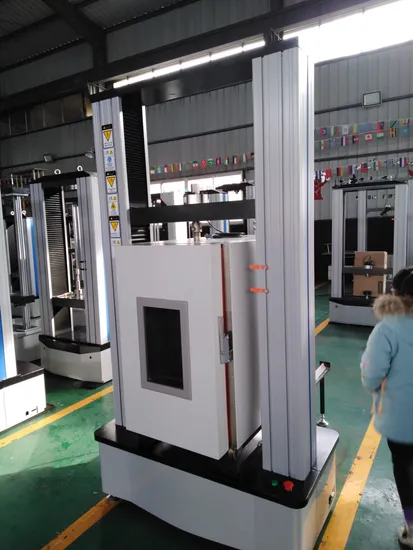
The CHENJI rubber fatigue testing machine determines the fatigue life and flexing resistance of rubber materials, rubber-to-metal bonded samples and vulcanized rubber specimens under repeated alternating tensile, compressive or tension-compression loading at room and service temperature. It applies controlled cyclic loading to rubber dumb-bell or cylindrical test specimens and automatically records the number of cycles, so fatigue life and crack-initiation behaviour can be evaluated reliably and repeatably.
Rubber parts such as seals, mounts and tyres fail by crack growth under repeated flexing rather than by a single overload, so a static test cannot predict their life. This machine reproduces the repeated loading a rubber component sees in service and stops automatically when the preset number of cycles is reached, giving a repeatable measure of flexing fatigue.
Technical Specifications
| Parameter | Value |
|---|---|
| Max. test force | 5 / 10 / 20 kN (series) |
| Test frequency | 1-5 Hz (low-cycle 0-3 Hz adjustable) |
| Max. amplitude | ±25 mm (stroke 0-50 mm adjustable) |
| Test stations | 2 stations |
| Specimen | Rubber dumb-bell / cylindrical specimen |
| Counting | Automatic counting, stops at preset cycles |
| Power supply | AC 380 V 3-phase, approx. 11 kW |
| Machine size | approx. 2000 × 600 × 1500 mm |
Cyclic loading and automatic counting
The machine applies repeated alternating tensile, compressive or tension-compression loading to rubber dumb-bell or cylindrical specimens at a frequency between 1 Hz and 5 Hz, with a low-cycle range of 0-3 Hz available for softer compounds, and an amplitude of ±25 mm (stroke 0-50 mm). The number of cycles is counted automatically and the test stops when the preset number of cycles is reached, so a long fatigue run does not need an operator to watch it. ISO 6943 covers the flexing fatigue of rubber and GB/T 1688 is the equivalent national standard, which is how the machine’s results are made comparable with other laboratories.
Rigid frame and stable control over long tests
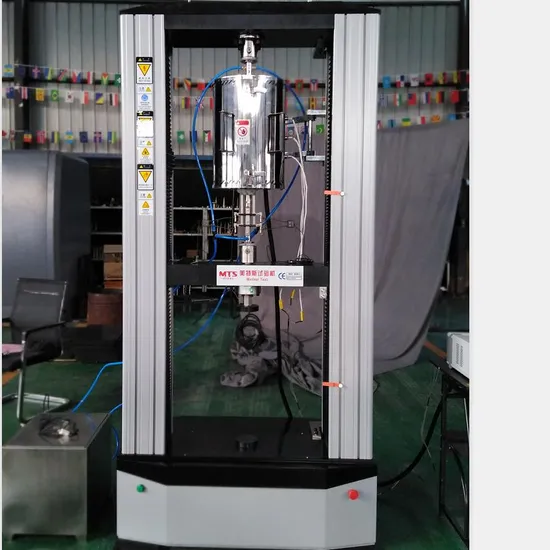
Because a fatigue test can run for millions of cycles, stability matters more than peak performance. The machine is constructed with a rigid frame and a servo-driven loading system, so the amplitude and frequency stay stable throughout a long-duration test. It carries two test stations, which lets two specimens run at once for a fair comparison, and it runs from a three-phase AC 380 V supply of approximately 11 kW in a footprint of about 2000 × 600 × 1500 mm.
Applications
The rubber fatigue testing machine is widely used in the rubber, tyre, sealing, vibration-isolation and elastomer manufacturing industries, as well as in material research and quality-control laboratories. It is used to compare compounds, to qualify incoming rubber, to check the effect of ageing or cure on fatigue life, and to support failure analysis when a rubber part has cracked in service.
Frequently Asked Questions
What does a rubber fatigue testing machine measure?
It measures the fatigue life and flexing resistance of rubber materials, rubber-to-metal bonded samples and vulcanized rubber specimens under repeated alternating loading, by recording the number of cycles the specimen survives.
What force and frequency does the machine cover?
The series covers maximum test forces of 5, 10 and 20 kN, with a test frequency of 1-5 Hz and a low-cycle range of 0-3 Hz adjustable, and an amplitude of ±25 mm (stroke 0-50 mm).
Does the test run automatically?
Yes. The number of cycles is counted automatically and the test stops when the preset number of cycles is reached, and the machine carries two test stations so two specimens can be tested at the same time.
Which standard covers rubber flexing fatigue?
ISO 6943 covers the flexing fatigue of rubber and GB/T 1688 is the equivalent national standard, so results from the machine are comparable with other laboratories that follow the same method.
What specimens and power supply does the machine use?
It is designed for rubber dumb-bell or cylindrical specimens, and runs from a three-phase AC 380 V supply of approximately 11 kW. The machine measures about 2000 × 600 × 1500 mm.
Related Products & Pages
- Rubber Testing Machines
- NZW-20 Metal Rotating Beam Fatigue Testing Machine
- High Temperature Fatigue Testing Machine
- Fatigue Testing Machines
About CHENJI & Support
CHENJI is the brand of Jinan Chenji International Trade Co., Ltd. (Shandong, China), a manufacturer and exporter of material testing machines since 2014, with in-house quality control plus third-party inspection by SGS or Bureau Veritas. The company holds ISO 9001 certification (626024QH073R1) and is a Bureau Veritas audited supplier (MIC-ASR2451820). Testing machines are normally supplied with a calibration certificate valid for 12 months and traceable to national force standards, and our engineers help you select the machine, fixtures and accessories for your specimen and method.
Every quotation is prepared against the standard you test to, so the delivered machine matches the test method rather than only the headline capacity. Spare parts, consumables and calibration support are available after delivery, and machines can be produced to OEM or ODM requirements when a customer drawing or specification is provided.
Selecting and Verifying a Testing Machine
Choosing a machine is a matter of matching capacity to the specimen and the method, not of buying the largest frame. A 1000 kN machine is not suitable for a sample that needs 1 N of force; capacity selection follows the specimen and the standard, and the force measuring system should be verified per ISO 7500-1 or ASTM E4 on a regular schedule. Load cells are commonly supplied as class 0.5 or class 1, which means the indicated force stays within ±0.5% or ±1% of the true force.
Test results are only comparable when they are quoted together with the standard, the specimen geometry, the test speed and the force measurement class. We are glad to review your test method and specimen so that the machine, fixtures and accessories are correctly specified before you order.
Request a Quotation
Tell CHENJI the rubber compound, specimen and cycle target you need to test, and we will confirm the rubber fatigue testing machine and price for a quotation.
Email annie@chenjitester.com or call / WhatsApp +86 158 5311 1612.
More Photos