High Temperature Fatigue Testing Machine (Servo-Hydraulic, up to 1200 °C)
Fatigue Testing Machines
Overview
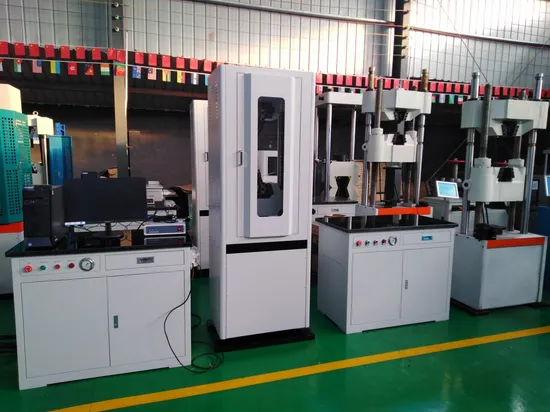
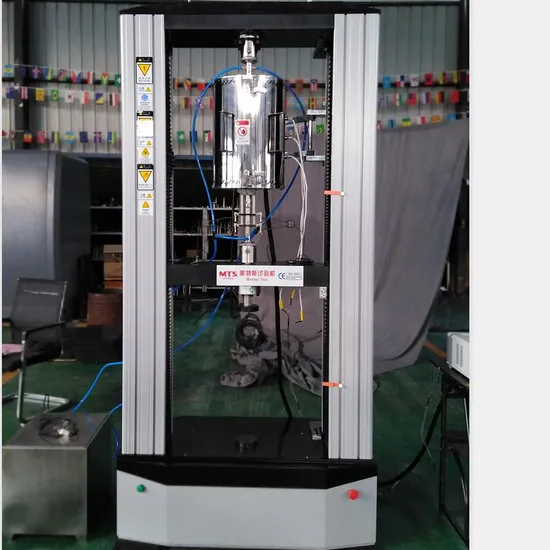
The CHENJI high-temperature fatigue testing machine determines the fatigue properties, fatigue life and high-temperature mechanical properties of metals, alloy materials and their components at temperatures up to 1200 °C, in addition to static tensile and compression testing at room temperature. It combines an electro-hydraulic servo loading system with an electrically heated furnace, so static and dynamic (fatigue) tests can be run across a wide force range at both room and elevated temperature.
Components such as turbine blades, boiler tubes and exhaust parts work under load while they are hot, and their fatigue behaviour at temperature cannot be inferred from a room-temperature test. The three-zone split-type resistance furnace provides a stable and uniform temperature field, which allows the fatigue behaviour and the interaction between creep and fatigue of high-temperature materials to be evaluated accurately.
Technical Specifications
| Parameter | Value |
|---|---|
| Static load | 50 / 100 / 200 / 250 kN (series) |
| Dynamic load | ±40 / ±80 / ±160 / ±160 kN |
| Frequency | 0.1-15 Hz (up to 50 Hz optional) |
| Piston stroke | ±50 / ±75 mm |
| Furnace temperature range | Room temperature to 1200 °C (1000 °C / 1200 °C optional) |
| Temperature stability | ±1-3 °C (within 1000 °C) |
| Heating rate | Approx. 5-15 °C/min |
| Furnace type | Split-type resistance furnace, three-zone |
Servo-hydraulic loading and furnace control
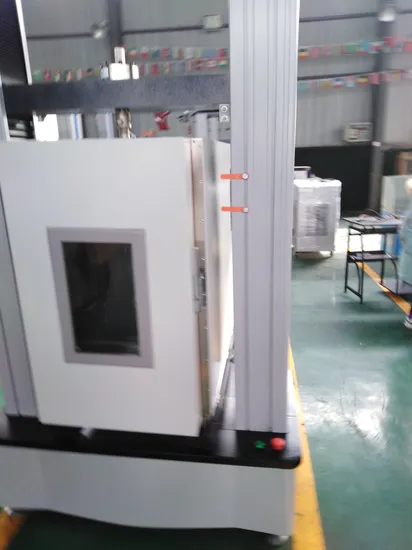
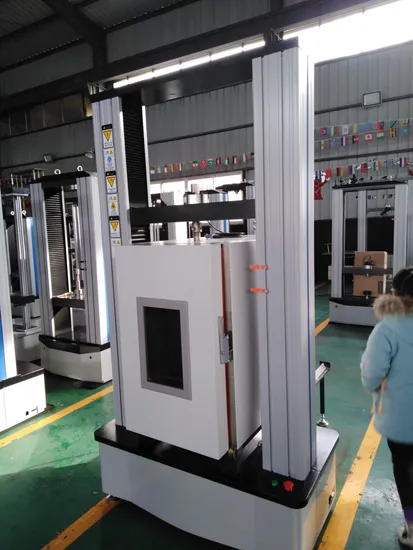
The machine pairs an electro-hydraulic servo loading system with a three-zone split-type resistance furnace, so the load and the temperature are controlled together throughout a test. The furnace heats from room temperature up to 1200 °C with a stability of ±1-3 °C within 1000 °C and a heating rate of about 5-15 °C/min, and it opens to allow a specimen to be mounted and the extensometer to be fitted. Because it is a split furnace with three independently controlled zones, the temperature along the gauge length is kept uniform, which is essential if the fatigue life is to mean anything.
Static and dynamic testing at temperature
By switching the control between static and dynamic modes the same machine performs both the high-temperature tensile test and the fatigue test. The series covers static loads from 50 kN to 250 kN and dynamic loads from ±40 kN to ±160 kN, at frequencies from 0.1 Hz to 15 Hz with up to 50 Hz available as an option – fatigue tests on servo-hydraulic and resonance machines are commonly run between 1 Hz and 100 Hz. The piston stroke is ±50 mm or ±75 mm depending on the model. GB/T 4338 and ISO 783 cover the tensile testing of metallic materials at elevated temperature, and ASTM E466 and ISO 1099 cover axial force-controlled fatigue testing, so results can be quoted against a recognised method.
Applications
The high-temperature fatigue testing machine is widely used in the aerospace, power-generation, automotive, boiler, petrochemical and materials-research industries, as well as in quality-control laboratories. It is used to qualify superalloys and heat-resistant steels, to study the fatigue and creep behaviour of turbine and boiler materials, to evaluate welds and coatings at temperature, and to support the design and life assessment of components that operate hot.
Frequently Asked Questions
What does the high temperature fatigue testing machine do?
It determines the fatigue properties, fatigue life and high-temperature mechanical properties of metals, alloys and their components up to 1200 °C, and also performs static tensile and compression testing at room temperature.
What load and frequency ranges are available?
The series covers static loads of 50, 100, 200 and 250 kN and dynamic loads of ±40, ±80, ±160 and ±160 kN, at frequencies from 0.1 Hz to 15 Hz, with up to 50 Hz available as an option.
How is the temperature kept uniform along the specimen?
A three-zone split-type resistance furnace heats the specimen from room temperature to 1200 °C with a stability of ±1-3 °C within 1000 °C, and the three independently controlled zones keep the temperature uniform along the gauge length.
Which standards cover high-temperature testing?
GB/T 4338 and ISO 783 cover tensile testing of metallic materials at elevated temperature, and ASTM E466 and ISO 1099 cover axial force-controlled fatigue testing, so results can be quoted against a recognised method.
What industries use a high-temperature fatigue machine?
It is used in the aerospace, power-generation, automotive, boiler, petrochemical and materials-research industries, and in quality-control laboratories, to qualify superalloys and heat-resistant steels and to assess turbine and boiler materials.
Related Products & Pages
- Fatigue Testing Machines
- NZW-20 Metal Rotating Beam Fatigue Testing Machine
- Resonance Fatigue Testing Machine
- Metal Testing Machines
About CHENJI & Support
CHENJI is the brand of Jinan Chenji International Trade Co., Ltd. (Shandong, China), a manufacturer and exporter of material testing machines since 2014, with in-house quality control plus third-party inspection by SGS or Bureau Veritas. The company holds ISO 9001 certification (626024QH073R1) and is a Bureau Veritas audited supplier (MIC-ASR2451820). Testing machines are normally supplied with a calibration certificate valid for 12 months and traceable to national force standards, and our engineers help you select the machine, fixtures and accessories for your specimen and method.
Every quotation is prepared against the standard you test to, so the delivered machine matches the test method rather than only the headline capacity. Spare parts, consumables and calibration support are available after delivery, and machines can be produced to OEM or ODM requirements when a customer drawing or specification is provided.
Selecting and Verifying a Testing Machine
Choosing a machine is a matter of matching capacity to the specimen and the method, not of buying the largest frame. A 1000 kN machine is not suitable for a sample that needs 1 N of force; capacity selection follows the specimen and the standard, and the force measuring system should be verified per ISO 7500-1 or ASTM E4 on a regular schedule. Load cells are commonly supplied as class 0.5 or class 1, which means the indicated force stays within ±0.5% or ±1% of the true force.
Test results are only comparable when they are quoted together with the standard, the specimen geometry, the test speed and the force measurement class. We are glad to review your test method and specimen so that the machine, fixtures and accessories are correctly specified before you order.
Request a Quotation
Tell CHENJI the material, test temperature and load range you need, and we will confirm the high-temperature fatigue testing machine, furnace and price for a quotation.
Email annie@chenjitester.com or call / WhatsApp +86 158 5311 1612.
More Photos