P-2T Metallographic Grinding and Polishing Machine
Metallographic Sample Preparation
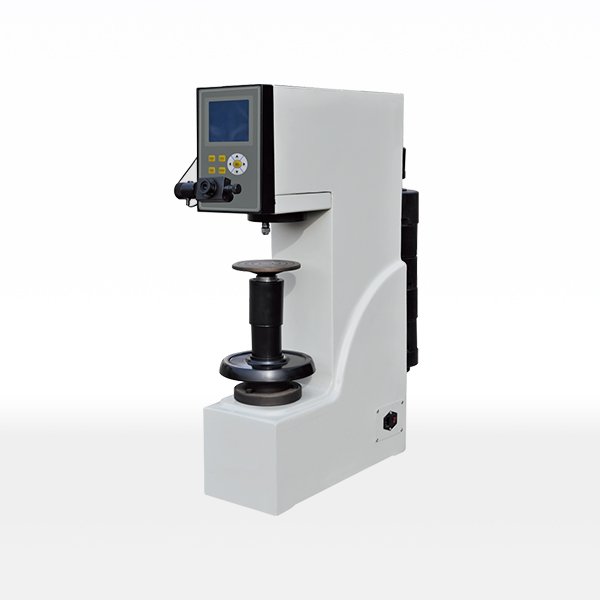
Overview
In the process of metallographic sample preparation, the polishing of the sample is a main process. After the mounted sample is polished on a polishing machine, a surface as bright as a mirror can be obtained. The P-2T metallographic sample polishing machine is a classic polishing equipment with stable transmission, low noise and convenient operation and maintenance.
The P-2T can meet the polishing requirements of a wide range of materials and has the advantage of a single-disc, single-control layout, so two people can work at the same time. It is suitable for the metallographic laboratories of factories, mines, universities, colleges and scientific research institutes.
Technical Specifications
| Parameter | Value |
|---|---|
| Diameter of throwing plate | Ø200 mm standard (Ø230 mm on request) |
| Speed | 1400 r/min (900 r/min on request) |
| Power supply | 380 V, 50 Hz (220 V, 50 Hz to order) |
| Input power | 400 W |
| Overall dimensions | 730 × 400 × 340 mm |
| Net weight | 35 kg |
Polishing performance and finish
A good polish removes the fine scratches left by grinding and brings the surface to a mirror finish so that the true microstructure can be seen. A typical sequence uses silicon carbide paper for grinding, then diamond suspensions from 9 um down to 0.25 um, and finishes with 0.05 um colloidal silica. The P-2T gives a stable platform at 1400 r/min for that sequence (a 900 r/min version is available for softer materials), and the standard O200 mm plate can be supplied in a O230 mm version for larger mounts.
Single-disc, single-control layout
The classic single-disc, single-control design keeps the machine simple and reliable: stable transmission, low noise and easy operation and maintenance. Two operators can share the machine at the same time, which improves throughput in a busy laboratory without adding a second unit. Consumables such as abrasive paper and polishing cloth are quick to change, so the time between samples stays short.
Applications
The P-2T is used in the metallographic laboratories of factories and mines, universities, colleges and scientific research institutes. Mounted samples from a press such as the XQ-2B are polished on the P-2T and then examined on a metallographic microscope or tested on a hardness tester. It is a practical choice where a compact, dependable polishing machine is needed.
Frequently Asked Questions
What is the P-2T used for?
The P-2T is a metallographic grinding and polishing machine that prepares mounted specimens to a mirror finish so that the true microstructure can be observed under a microscope.
What is the disc diameter and speed of the P-2T?
The throwing (polishing) plate is O200 mm as standard, with a O230 mm version available on request, and the speed is 1400 r/min with a 900 r/min version available for softer materials.
What power supply and input power does the P-2T use?
The standard supply is 380 V, 50 Hz with a 400 W input, and a 220 V, 50 Hz version can be ordered. The machine is compact, at 730 x 400 x 340 mm and 35 kg net.
Can the P-2T be shared by two operators?
Yes. The single-disc, single-control layout still allows two people to work at the same time, which is one of the advantages of the compact P-2T design.
Which machines are used around the P-2T?
Samples are usually mounted first on a press such as the XQ-2B or ZXQ-5, polished on the P-2T, and then examined on a metallographic microscope or tested on a hardness tester.
Related Products & Pages
- Metallographic Sample Preparation
- P-2 Metallographic Grinding and Polishing Machine
- MP-2M Touch Screen Metallographic Sample Grinding and Polishing Machine
- Metallographic Hardness Testing
About CHENJI & Support
CHENJI is the brand of Jinan Chenji International Trade Co., Ltd. (Shandong, China), a manufacturer and exporter of material testing machines since 2014, with in-house quality control plus third-party inspection by SGS or Bureau Veritas. The company holds ISO 9001 certification (626024QH073R1) and is a Bureau Veritas audited supplier (MIC-ASR2451820). Testing machines are normally supplied with a calibration certificate valid for 12 months and traceable to national force standards, and our engineers help you select the machine, fixtures and accessories for your specimen and method.
Every quotation is prepared against the standard you test to, so the delivered machine matches the test method rather than only the headline capacity. Spare parts, consumables and calibration support are available after delivery, and machines can be produced to OEM or ODM requirements when a customer drawing or specification is provided.
Selecting and Verifying a Testing Machine
Choosing a machine is a matter of matching capacity to the specimen and the method, not of buying the largest frame. A 1000 kN machine is not suitable for a sample that needs 1 N of force; capacity selection follows the specimen and the standard, and the force measuring system should be verified per ISO 7500-1 or ASTM E4 on a regular schedule. Load cells are commonly supplied as class 0.5 or class 1, which means the indicated force stays within ±0.5% or ±1% of the true force.
Test results are only comparable when they are quoted together with the standard, the specimen geometry, the test speed and the force measurement class. We are glad to review your test method and specimen so that the machine, fixtures and accessories are correctly specified before you order.
Request a Quotation
Tell CHENJI the materials and finish you need, and we will recommend the disc size, speed and consumables for the P-2T.
Email annie@chenjitester.com or call / WhatsApp +86 158 5311 1612.