EZ Type Wire Torsion Testing Machine (Wire Rod Torsion Tester)
Torsion Testing Machines
Overview
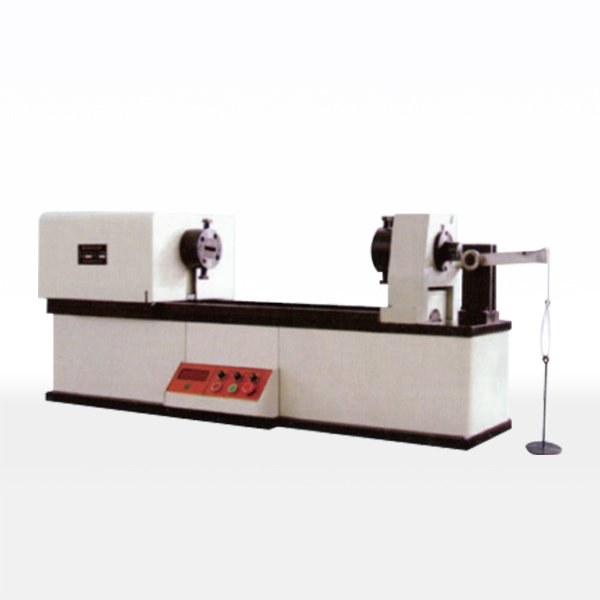
The EZ series wire torsion testing machine is built according to the technical requirements of the wire torsion test method standard. It is a new type of digital display and counting wire rod torsion testing machine developed by our factory, used to determine the ability of metal wires to withstand plastic deformation in one-way or two-way torsion and to reveal surface and internal defects in the wire.
The torsion test is the standard way to judge wire ductility and workmanship, and it gives a reliable measurement for the plants that produce wire and the users who consume it. By twisting a wire between two chucks until it cracks or fails, the test exposes surface seams, inclusions and poor annealing that a tensile test can miss, which makes it a routine check for wire rod, prestressing wire and cable products.
Technical Specifications
| Parameter | Value |
|---|---|
| Detection wire diameter | Ø0.1 to Ø1.0 mm |
| Coaxiality of the two chucks | 0.4 mm |
| Straightness of the moving guide rail over its whole length | < 0.2 mm |
| Maximum distance between the two chucks | 550 mm |
| Rotational speed of the torsion disc | 30.6 ± 10% rev/min |
| Jaw hardness | HRC 55-65 |
| Axial force weight | ± 1% |
| Working noise | < 70 dB(A) |
| Working voltage | AC 380 V ± 10%, 50 Hz |
Digital display and counting
The EZ machine is a digital display and counting type, so the number of twists is recorded electronically instead of being counted by eye. That makes the result repeatable between operators and lets the test end at a defined number of turns or at the first visible crack. The machine offers several rotation speeds so that hard and soft wires can each be tested at a suitable rate, and the standard wire torsion test methods – ISO 7800 for the simple torsion test of metallic wire and ISO 9649 for the reverse torsion test – define how the specimen is held and twisted.
Mechanical accuracy and alignment
Wire torsion results are very sensitive to the alignment of the two chucks and to the straightness of the guide rail, because a bent or off-centre wire develops a false crack. The EZ machine holds the coaxiality of the two chucks to 0.4 mm and the straightness of the moving guide rail to better than 0.2 mm over its whole length, with a maximum distance of 550 mm between the chucks. The jaws are hardened to HRC 55-65 so that they grip the wire without slipping under the axial force, which is held to within 1 % of the set value.
Applications
The EZ wire torsion testing machine is used by wire and cable producers, spring and fastener wire suppliers, and the laboratories that qualify incoming wire. It is a simple, low-noise machine (below 70 dB(A)) that fits easily into a production or quality-control room, running from a three-phase AC 380 V, 50 Hz supply. Together with a tensile or bend test it gives a complete picture of wire quality, and it is often used to confirm the ductility of wire before it is coiled into springs or formed into fasteners.
Frequently Asked Questions
What does a wire torsion testing machine do?
It twists a wire specimen between two chucks in one direction or in both directions and records the number of turns to crack or failure, which shows the plastic-deformation ability of the wire and reveals surface and internal defects.
What wire diameter does the EZ machine test?
The EZ series covers a detection wire diameter range of Ø0.1 mm to Ø1.0 mm, which suits fine wires such as spring wire, cable wire and prestressing wire.
How accurate is the EZ wire torsion testing machine?
The coaxiality of the two chucks is 0.4 mm and the straightness of the moving guide rail is better than 0.2 mm over its whole length, which keeps the specimen aligned and the test repeatable. The maximum distance between the two chucks is 550 mm.
Which standards cover wire torsion testing?
ISO 7800 covers the simple torsion test for metallic wire and ISO 9649 covers the reverse torsion test. The EZ series is made to the technical requirements of the wire torsion test method standard, and a room-temperature torsion test of metals is also covered in the GB/T series.
What is the rotational speed and power supply of the EZ machine?
The torsion disc runs at 30.6 ± 10% rev/min with several speeds available, and the machine works from an AC 380 V ± 10%, 50 Hz supply with a working noise below 70 dB(A).
Related Products & Pages
- Torsion Testing Machines
- NDW Microcomputer Control Torsion Testing Machine
- Metal Torsion Testing Machine / Torque Tester
- Metal Testing Machines
About CHENJI & Support
CHENJI is the brand of Jinan Chenji International Trade Co., Ltd. (Shandong, China), a manufacturer and exporter of material testing machines since 2014, with in-house quality control plus third-party inspection by SGS or Bureau Veritas. The company holds ISO 9001 certification (626024QH073R1) and is a Bureau Veritas audited supplier (MIC-ASR2451820). Testing machines are normally supplied with a calibration certificate valid for 12 months and traceable to national force standards, and our engineers help you select the machine, fixtures and accessories for your specimen and method.
Every quotation is prepared against the standard you test to, so the delivered machine matches the test method rather than only the headline capacity. Spare parts, consumables and calibration support are available after delivery, and machines can be produced to OEM or ODM requirements when a customer drawing or specification is provided.
Selecting and Verifying a Testing Machine
Choosing a machine is a matter of matching capacity to the specimen and the method, not of buying the largest frame. A 1000 kN machine is not suitable for a sample that needs 1 N of force; capacity selection follows the specimen and the standard, and the force measuring system should be verified per ISO 7500-1 or ASTM E4 on a regular schedule. Load cells are commonly supplied as class 0.5 or class 1, which means the indicated force stays within ±0.5% or ±1% of the true force.
Test results are only comparable when they are quoted together with the standard, the specimen geometry, the test speed and the force measurement class. We are glad to review your test method and specimen so that the machine, fixtures and accessories are correctly specified before you order.
Request a Quotation
Tell CHENJI your wire diameter and material, and we will confirm the EZ torsion machine configuration, chucks and price for a quotation.
Email annie@chenjitester.com or call / WhatsApp +86 158 5311 1612.