WAW-D Series Computerized Hydraulic Universal Testing Machine (30 / 60 / 100 Ton) for Steel
Hydraulic Universal Testing Machines
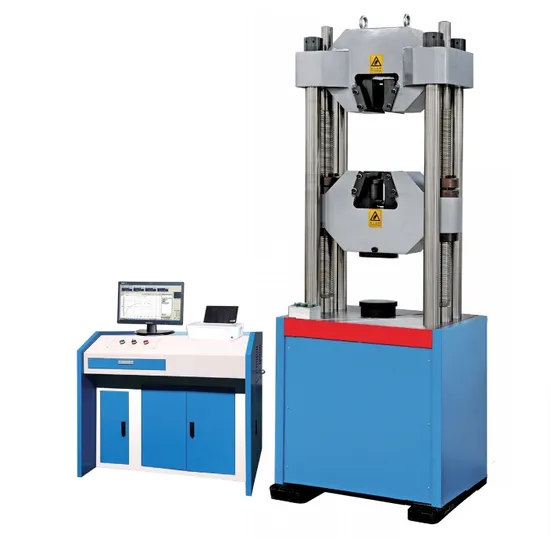
Overview
The WAW-D series is an auto-control computerized hydraulic universal testing machine offered in 30 ton, 60 ton and 100 ton capacities, with hydraulic powering, for tensile, compression and bending tests on steel and steel rebar to ASTM, ISO, GB and JIS standards. Like the rest of the family, it adopts microcomputer control with a digital broadband and a digital-valve driven precision hydraulic cylinder, so the test force, displacement and deformation can each be run under an automatic control mode.
The main frame places the hydraulic cylinder underneath the crosshead, with the power and transmission unit at the bottom of the machine, which keeps the test space clear and the frame stable under load. The upper and lower jaws have a full-open structure with automatic hydraulic clamping, so specimens are easy to load and held securely. A brand-name computer runs the Windows control and analysis software for parameter setting, process control, data acquisition, processing, analysis, storage and display.
Technical Specifications
| Parameter | Value |
|---|---|
| Model series | WAW-D auto-control computerized hydraulic universal testing machine |
| Capacities | 30 ton / 60 ton / 100 ton (300 kN / 600 kN / 1000 kN) |
| Test types | Tensile, compression and bending |
| Standards | GB, ISO, JIS and ASTM steel testing; GB/T 228.1-2010 and other requirements |
| Main frame | Hydraulic cylinder underneath type; power and transmission unit mounted at the base |
| Jaws | Upper and lower jaws with full-open structure and automatic hydraulic clamping |
| Control | Microcomputer control digital broadband; digital valve driven precision hydraulic cylinder |
| Load control | PID control, constant-rate, speed range 0.2 to 5 % FS/s, with load-holding function |
| Displacement control | PID control, constant-rate, speed range 0.6 to 60 mm/min, with displacement function |
| Strain control | PID control, constant-rate, speed range 0.00025 /s to 0.0025 /s, with strain-holding function |
| Test force resolution | 1/350000 |
| Converter | 24-bit high-precision AD converter, efficient code ±300000 |
| Computer | Brand computer (Lenovo), Windows control and analysis software |
| Reported data | Tensile strength, elastic modulus, elongation, yield strength and extension strength, with curves and test reports |
| Applications | Steel bar, steel rebar and similar metallic specimens |
Auto-control testing of steel to ASTM, ISO, GB and JIS
The machine runs each test in load control, displacement control or strain control as the method requires, and it is used with GB, ISO, JIS and ASTM steel testing so that one frame covers the tensile, compression and bending tests called for by the common international standards. The measuring system uses a 24-bit high-precision AD converter with an efficient code of about ±300000 and a test force resolution of 1/350000, and load, displacement and strain are each closed under PID control at a constant rate, which keeps the yield point and the elastic modulus reproducible.
Control ranges and data handling
Load can be controlled from 0.2 to 5 % FS/s, displacement from 0.6 to 60 mm/min and strain from 0.00025 /s to 0.0025 /s, each with a holding function, so the machine can follow the rate required by the standard being applied. The supplied computer software sets the parameters, controls the process, acquires and processes the data, analyses and stores the results and displays the test curve, reporting tensile strength, elastic modulus, elongation, yield strength and extension strength together with the test report.
Frame and gripping for bar and rebar
The cylinder-underneath frame with the power unit at the base gives a stable machine in which the test space is clear for long bar specimens. The upper and lower jaws open fully and clamp automatically under hydraulic pressure, so a steel bar can be loaded quickly and gripped firmly through the test. This is the arrangement normally used for the tensile testing of steel bar and steel rebar, and, with the correct fixtures, for the compression and bending tests that a materials laboratory has to carry out on the same machine.
Frequently Asked Questions
What capacities does the WAW-D series cover?
The series is offered in 30 ton, 60 ton and 100 ton capacities (about 300 kN, 600 kN and 1000 kN), for tensile, compression and bending tests.
Which standards does the machine support?
It is used with ASTM, ISO, GB and JIS steel testing, including GB/T 228.1-2010 for the tensile test of metallic materials at room temperature.
What control modes and ranges are provided?
Load, displacement and strain each use PID control at a constant rate: load from 0.2 to 5 % FS/s, displacement from 0.6 to 60 mm/min and strain from 0.00025 /s to 0.0025 /s, each with a holding function.
What data does the software report?
Parameter setting, process control, data acquisition, processing, analysis, storage and display, including tensile strength, elastic modulus, elongation, yield strength and extension strength.
How are specimens clamped?
The machine has upper and lower jaws with a full-open structure and an automatic hydraulic clamping system, so clamping is convenient and stable throughout the test.
Related Products & Pages
- Hydraulic Universal Testing Machines
- 300/600/1000 kN WAW-B Series Hydraulic UTM
- WAW-D Series 30/60/100 Ton Hydraulic UTM
- Metal Testing Machines
About CHENJI & Support
CHENJI is the brand of Jinan Chenji International Trade Co., Ltd. (Shandong, China), a manufacturer and exporter of material testing machines since 2014, with in-house quality control plus third-party inspection by SGS or Bureau Veritas. The company holds ISO 9001 certification (626024QH073R1) and is a Bureau Veritas audited supplier (MIC-ASR2451820). Testing machines are normally supplied with a calibration certificate valid for 12 months and traceable to national force standards, and our engineers help you select the machine, fixtures and accessories for your specimen and method.
Every quotation is prepared against the standard you test to, so the delivered machine matches the test method rather than only the headline capacity. Spare parts, consumables and calibration support are available after delivery, and machines can be produced to OEM or ODM requirements when a customer drawing or specification is provided.
Selecting and Verifying a Testing Machine
Choosing a machine is a matter of matching capacity to the specimen and the method, not of buying the largest frame. A 1000 kN machine is not suitable for a sample that needs 1 N of force; capacity selection follows the specimen and the standard, and the force measuring system should be verified per ISO 7500-1 or ASTM E4 on a regular schedule. Load cells are commonly supplied as class 0.5 or class 1, which means the indicated force stays within ±0.5% or ±1% of the true force.
Test results are only comparable when they are quoted together with the standard, the specimen geometry, the test speed and the force measurement class. We are glad to review your test method and specimen so that the machine, fixtures and accessories are correctly specified before you order.
Request a Quotation
Tell CHENJI the steel grade, the specimen size and the standard you test to, and we will confirm the WAW-D series machine, capacity, jaws and software for a quotation.
Email annie@chenjitester.com or call / WhatsApp +86 158 5311 1612.