JB-W300/500/YZ Microcomputer Control Low Temperature Automatic Impact Testing Machine
Impact & Pressure Testing
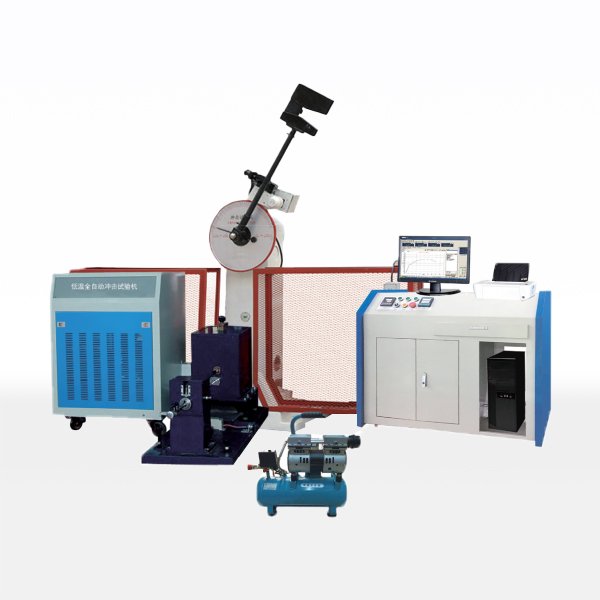
Overview
The JB-W300/500/YZ is a microcomputer-controlled low-temperature automatic impact testing machine used to test the impact resistance of metal materials under dynamic loads. It is a necessary instrument for metallurgical and machinery manufacturing plants, and it is also used by research units that are studying new materials, because a low-temperature impact result shows how a material behaves when it is cold and therefore more prone to brittle fracture.
The machine runs a fully automatic cycle. Swinging and hanging the pendulum, feeding the specimen, positioning it, striking it and controlling the temperature are all carried out by electrical and mechanical controls, and a special feeding device feeds the specimens automatically with automatic section positioning. The time from a specimen leaving the furnace to being struck is not more than 2 seconds, which meets the requirement of the low-temperature Charpy impact test method for metals, so the specimen is broken at the intended test temperature.
Technical Specifications
| Parameter | Value |
|---|---|
| Models | JB-W300/500/YZ (compressor cooling); JB-W300/500/DZ (liquid nitrogen) |
| Cooling method | Compressor (YZ); liquid nitrogen (DZ) |
| Temperature control range (room temperature < 25 °C) | Room temperature to -60 / -80 °C (YZ); room temperature to -196 °C (DZ) |
| Constant temperature accuracy | ±0.5 °C (YZ); ±2 °C (DZ) |
| Cooling rate | Room temperature to -80 °C in not more than 90 minutes (YZ); room temperature to -196 °C in not more than 60 minutes (DZ) |
| Sample positioning method | Pneumatic |
| Protective device | Safety net |
| Host motor | 0.25 kW |
| Time from out-of-furnace to impact | Not more than 2 seconds |
| Main structure | Split structure, cantilever hanging pendulum, U-shaped hammer body |
| Impact knife | Screw-mounted and fixed, simple and convenient to replace |
| Sample support | Simply supported beams |
| Standards | GB/T 3808-2002 (Inspection of Pendulum Impact Testing Machines); GB/T 229-2007 (Metallic materials — Charpy pendulum impact test method) |
| Operation | Fully automatic control of swinging, hanging, feeding, positioning, impact and temperature adjustment |
Automatic cycle and test timing
Because the feeding, positioning, temperature adjustment and striking are all automated, the operator does not have to handle a cold specimen or rush it to the machine. The special feeding device carries the specimen to the anvil and positions the notch automatically, and the whole sequence is timed so that the interval between the specimen leaving the furnace and the impact is not more than 2 seconds. That short interval is what keeps the specimen at the intended low temperature when it is broken, which is the point of a low-temperature Charpy test. After the specimen has been struck, the remaining energy of the pendulum can be used to swing it back up ready for the next test, so the machine works efficiently through a batch.
Pendulum and frame design
The main body is of split construction with a cantilever hanging pendulum and a U-shaped hammer body, and the impact knife is fixed with screws so that it is simple and convenient to replace. The specimen is supported on simply supported beams, and a safety net is fitted to protect the operator. The design follows the inspection requirements of GB/T 3808-2002 for pendulum impact testing machines and is used to carry out tests to GB/T 229-2007, the metallic-material Charpy pendulum impact test method.
Temperature control: compressor or liquid nitrogen
Two cooling systems are available. The YZ version uses a compressor and covers room temperature down to -60 °C or -80 °C with a constant-temperature accuracy of about ±0.5 °C, cooling from room temperature to -80 °C in not more than 90 minutes. This is the usual choice for testing at intermediate sub-zero temperatures. When a deeper test temperature is needed, the DZ version uses liquid nitrogen and reaches room temperature down to -196 °C, with a constant-temperature accuracy of about ±2 °C and a cooling time from room temperature to -196 °C of not more than 60 minutes. Both versions use pneumatic sample positioning and a safety net, and the host motor is 0.25 kW.
Frequently Asked Questions
What is the JB-W300/500/YZ used for?
It tests the impact resistance of metal materials under dynamic loads at low temperature, and it is used in metallurgical and machinery manufacturing plants and by research units working on new materials.
How long may a specimen be out of the furnace before impact?
Not more than 2 seconds, which meets the requirement of the low-temperature Charpy impact test method for metals.
What is the difference between the YZ and DZ versions?
The YZ version is cooled by a compressor and covers room temperature down to -60 / -80 °C, while the DZ version uses liquid nitrogen and reaches room temperature down to -196 °C. The constant-temperature accuracy is about ±0.5 °C for the compressor version and about ±2 °C for the liquid-nitrogen version.
Which standards does the machine follow?
The machine complies with GB/T 3808-2002, Inspection of Pendulum Impact Testing Machines, and carries out impact tests to GB/T 229-2007, the Charpy pendulum impact test method.
What safety and automation features are provided?
Operation is fully automatic for swinging, hanging, feeding, positioning, impact and temperature adjustment, with pneumatic sample positioning, a safety net for the operator and automatic section positioning of the specimen.
Related Products & Pages
- Impact & Pressure Testing
- JB-WCDZ Ultra-Low Temperature Impact Testing Machine
- Digital Display Impact Testing Machine
- 1J/2.75J/5.5J/11J/22J Digital Izod Charpy
About CHENJI & Support
CHENJI is the brand of Jinan Chenji International Trade Co., Ltd. (Shandong, China), a manufacturer and exporter of material testing machines since 2014, with in-house quality control plus third-party inspection by SGS or Bureau Veritas. The company holds ISO 9001 certification (626024QH073R1) and is a Bureau Veritas audited supplier (MIC-ASR2451820). Testing machines are normally supplied with a calibration certificate valid for 12 months and traceable to national force standards, and our engineers help you select the machine, fixtures and accessories for your specimen and method.
Every quotation is prepared against the standard you test to, so the delivered machine matches the test method rather than only the headline capacity. Spare parts, consumables and calibration support are available after delivery, and machines can be produced to OEM or ODM requirements when a customer drawing or specification is provided.
Selecting and Verifying a Testing Machine
Choosing a machine is a matter of matching capacity to the specimen and the method, not of buying the largest frame. A 1000 kN machine is not suitable for a sample that needs 1 N of force; capacity selection follows the specimen and the standard, and the force measuring system should be verified per ISO 7500-1 or ASTM E4 on a regular schedule. Load cells are commonly supplied as class 0.5 or class 1, which means the indicated force stays within ±0.5% or ±1% of the true force.
Test results are only comparable when they are quoted together with the standard, the specimen geometry, the test speed and the force measurement class. We are glad to review your test method and specimen so that the machine, fixtures and accessories are correctly specified before you order.
Request a Quotation
Tell CHENJI the test temperature, the specimen size and the standard, and we will confirm the JB-W300/500 impact testing machine, the cooling system (compressor or liquid nitrogen) and the fixtures for a quotation.
Email annie@chenjitester.com or call / WhatsApp +86 158 5311 1612.