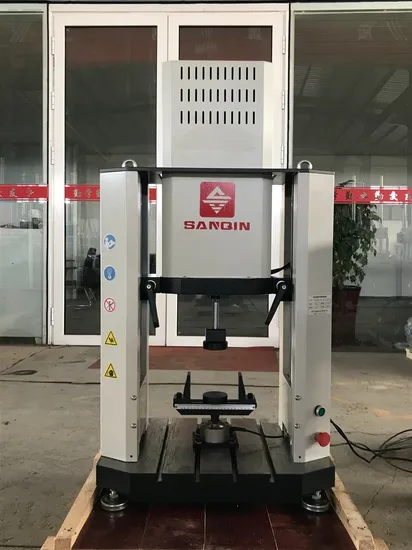
1 kN / 5 kN / 10 kN EDT Series Electronic Fatigue Testing Machine
Fatigue Testing Machines
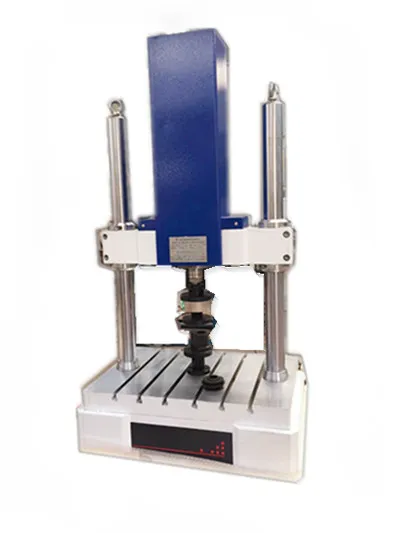
Overview
The EDT series electronic fatigue testing machine is used for dynamic and static high-precision, small-load mechanical performance testing of composite materials, metals and non-metallic materials. It is commonly used for the tensile, compression and bending tests of materials such as artificial blood vessels, soft tissues, bone plates, interbody cages, knee joints, spinal fixators and metal coatings.
Small-load fatigue and durability testing is a growing requirement in medical devices, composite development and light-alloy research, where a large servo-hydraulic frame is simply too big and too coarse. The EDT series is a desktop electronic machine that applies an accurate, controlled cyclic load to a small specimen and measures both the force and the displacement.
Technical Specifications
| Parameter | Value |
|---|---|
| Models | EDT3103, EDT3503, EDT3104 |
| Max force (kN) | 1 (EDT3103) / 5 (EDT3503) / 10 (EDT3104) |
| Test force accuracy | ≤ 0.5% or ≤ 1% |
| Actuator stroke | 150 mm |
| Displacement accuracy | ≤ 0.5% FS |
| Frequency range | 0.01-15 Hz (1 kN, 5 kN); 0.01-10 Hz (10 kN) |
| Test waveform | Sine, Triangle, Ramp |
| Structure type | Desktop |
| Column spacing | 500 mm |
| Test height | 50-500 mm |
| Host dimensions | 700 × 450 × 1500 mm (1 kN, 5 kN); 700 × 500 × 1600 mm (10 kN) |
| Weight | 220 kg (1 kN) / 250 kg (5 kN) / 300 kg (10 kN) |
Dynamic and static testing in one machine
A fatigue test applies a controlled cyclic load and counts the cycles until the specimen cracks or fails, which reveals how a material behaves under repeated loading that a one-off static test cannot show. The EDT series runs at frequencies from 0.01 Hz to 15 Hz for the 1 kN and 5 kN models and 0.01 Hz to 10 Hz for the 10 kN model, with sine, triangle and ramp waveforms. Axial-force-controlled fatigue testing of metallic materials is covered by ASTM E466 and ISO 1099, and servo-hydraulic and resonance fatigue machines are commonly run between 1 Hz and 100 Hz – the EDT series sits at the low-force end of that range, where a precise, small desktop machine is the right tool.
Precision and specimen range
The actuator stroke is 150 mm and the displacement accuracy is within 0.5 % of full scale, while the test force accuracy is within 0.5 % or 1 %. Column spacing is 500 mm and the test height is adjustable from 50 mm to 500 mm, so a wide range of small specimens, coupons and implant assemblies can be fitted. The forced-air cooled, desktop frame keeps the footprint small enough for a laboratory bench while still holding the alignment needed for a valid small-load test.
Applications
The EDT series is used for the durability and performance testing of medical implants and biomaterials – artificial blood vessels, soft tissues, bone plates, interbody cages, knee joints and spinal fixators – and for the tensile, compression and bending testing of composites and metal coatings. It is also used in light-alloy and thin-section research, in universities and institutes, and in production quality control where small parts must be tested to a defined load and cycle count.
Frequently Asked Questions
What is the EDT series electronic fatigue testing machine used for?
It performs dynamic and static high-precision, small-load mechanical performance tests on composite materials, metals and non-metallic materials, commonly the tensile, compression and bending testing of medical implants, soft tissues and metal coatings.
What force capacities are available in the EDT series?
The EDT series covers three models: the EDT3103 at 1 kN, the EDT3503 at 5 kN and the EDT3104 at 10 kN, so the right machine can be selected for the specimen load.
What frequency range and waveforms does the EDT series support?
The 1 kN and 5 kN models run from 0.01 Hz to 15 Hz, and the 10 kN model from 0.01 Hz to 10 Hz, with sine, triangle and ramp waveforms.
How accurate is the EDT series?
Test force accuracy is within 0.5 % or 1 % and displacement accuracy is within 0.5 % of full scale, with a 150 mm actuator stroke and 500 mm column spacing.
Which standards apply to axial fatigue testing?
Axial force-controlled fatigue testing of metallic materials is covered by ASTM E466 and ISO 1099. For a valid, comparable result the standard, specimen geometry, test speed and force measurement class should always be quoted together.
Related Products & Pages
- Fatigue Testing Machines
- Resonance Fatigue Testing Machine
- Automotive Testing Machines
- Spring Testing Machines
About CHENJI & Support
CHENJI is the brand of Jinan Chenji International Trade Co., Ltd. (Shandong, China), a manufacturer and exporter of material testing machines since 2014, with in-house quality control plus third-party inspection by SGS or Bureau Veritas. The company holds ISO 9001 certification (626024QH073R1) and is a Bureau Veritas audited supplier (MIC-ASR2451820). Testing machines are normally supplied with a calibration certificate valid for 12 months and traceable to national force standards, and our engineers help you select the machine, fixtures and accessories for your specimen and method.
Every quotation is prepared against the standard you test to, so the delivered machine matches the test method rather than only the headline capacity. Spare parts, consumables and calibration support are available after delivery, and machines can be produced to OEM or ODM requirements when a customer drawing or specification is provided.
Selecting and Verifying a Testing Machine
Choosing a machine is a matter of matching capacity to the specimen and the method, not of buying the largest frame. A 1000 kN machine is not suitable for a sample that needs 1 N of force; capacity selection follows the specimen and the standard, and the force measuring system should be verified per ISO 7500-1 or ASTM E4 on a regular schedule. Load cells are commonly supplied as class 0.5 or class 1, which means the indicated force stays within ±0.5% or ±1% of the true force.
Test results are only comparable when they are quoted together with the standard, the specimen geometry, the test speed and the force measurement class. We are glad to review your test method and specimen so that the machine, fixtures and accessories are correctly specified before you order.
Request a Quotation
Tell CHENJI the specimen, load and cycle count you need, and we will recommend the right EDT model, grips and fixtures for a quotation.
Email annie@chenjitester.com or call / WhatsApp +86 158 5311 1612.
More Photos