WDW Microcomputer Control Electronic Universal Testing Machine
Electronic Universal Testing Machines
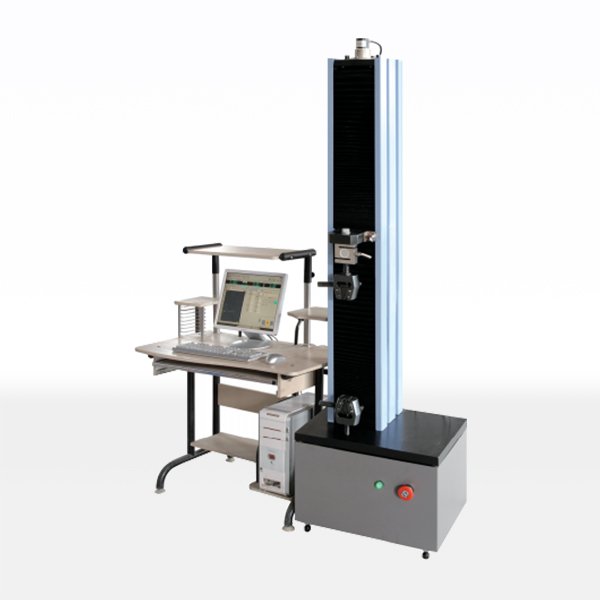
Overview
The WDW microcomputer control electronic universal testing machine tests and analyses the mechanical properties of metals, non-metals and composite materials, and is widely used in aerospace, petrochemical, machinery manufacturing, plastic and rubber, ceramic and building materials, metal materials and construction engineering. It performs tension, compression, bending, peeling, shearing, tearing, puncture and bursting tests, and supports high- and low-temperature testing, according to GB, ASTM, JIS and DIN standards.
From a single test the machine can determine yield strength, tensile strength, compression and bending strength, elongation, constant-elongation strength, non-proportional strength and elastic modulus. The control system uses computer control combined with advanced electronic measurement and control, in a standardised and unitised design, so the machine has accurate control and measurement, a flexible configuration, easy exchange of accessories and convenient servicing.
Technical Specifications
| Parameter | Value |
|---|---|
| Model | WDW single column |
| Maximum test force | 50 N, 100 N, 200 N, 500 N, 1000 N, 2000 N, 3000 N, 5000 N, 10000 N |
| Effective stretching space | 700 mm |
| Load measurement range | 2% – 100% of the maximum load |
| Load measurement accuracy | Better than ± 1% |
| Speed range | 0.05 – 500 mm/min |
| Speed accuracy | Better than ± 1% |
| Displacement measurement | Resolution 0.01 mm |
| Dimensions | 750 × 530 × 1820 mm |
| Power supply | 220 V ± 10%, 1 kW |
| Weight | 400 kg |
| Fixture configuration | 1 set of tensile fixtures and compression aids; other fixtures optional |
| Test types | Tension, compression, bending, peeling, shearing, tearing, puncture, bursting, high and low temperature |
| Standards | GB, ASTM, JIS, DIN |
Computer control and three control modes
The machine has three control modes – stress, strain and displacement – and the control mode can be switched at will during a test. This is what allows one machine to run a displacement-controlled tensile test, a stress-rate-controlled test and a strain-controlled test without changing hardware. Test data are collected and processed automatically, various curves are drawn and a test report is printed, and the machine includes mechanical limit protection, overload protection, over-current protection and leakage protection for safe operation.
Capacity and specimen space
The WDW single-column frame is available in capacities from 50 N up to 10 kN, with an effective stretching space of 700 mm, so it covers films, elastomers, plastics, small components and thin metal specimens as well as textile and packaging materials. Load is measured over 2% to 100% of the maximum load with an accuracy better than ± 1%, speed is adjustable from 0.05 to 500 mm/min with an accuracy better than ± 1%, and displacement is measured with a resolution of 0.01 mm. The standard fixture set includes tensile fixtures and compression aids, and other fixtures are available as options.
Applications and configuration
Because the frame accepts a wide range of grips and fixtures, the same machine serves quality control, incoming inspection and research across many industries – from rubber and plastics to composites, ceramics, building materials and small metal parts. The load cell and fixtures are selected against the specimen and the method, so the machine can be configured for the standard you test to. It is a bench instrument (about 750 × 530 × 1820 mm and 400 kg), runs from a 220 V single-phase supply of about 1 kW, and is normally supplied with general-purpose test software.
Frequently Asked Questions
What is the maximum capacity of the WDW machine?
This single-column WDW is offered with maximum test forces from 50 N up to 10000 N (10 kN), with an effective stretching space of 700 mm.
Which tests can the WDW machine perform?
Tension, compression, bending, peeling, shearing, tearing, puncture and bursting tests, plus high- and low-temperature testing, according to GB, ASTM, JIS and DIN standards. It determines yield strength, tensile strength, compression and bending strength, elongation, constant-elongation strength, non-proportional strength and elastic modulus.
What control modes does it support?
Three modes – stress, strain and displacement – which can be switched at will during a test.
What are the speed range and accuracy?
The speed range is 0.05 to 500 mm/min with an accuracy better than ± 1%; load measurement accuracy is better than ± 1% over 2% to 100% of the maximum load, and displacement resolution is 0.01 mm.
What fixtures are supplied?
The standard configuration includes one set of tensile fixtures and compression aids. Other fixtures, including bending and shear tooling, are available as options.
Related Products & Pages
- Electronic Universal Testing Machines
- Metal Testing Machines
- WAW-1000A 1000 kN Hydraulic Universal Testing Machine
- WEW-300BD/600BD/1000BD Screen Display Universal Testing Machine
About CHENJI & Support
CHENJI is the brand of Jinan Chenji International Trade Co., Ltd. (Shandong, China), a manufacturer and exporter of material testing machines since 2014, with in-house quality control plus third-party inspection by SGS or Bureau Veritas. The company holds ISO 9001 certification (626024QH073R1) and is a Bureau Veritas audited supplier (MIC-ASR2451820). Testing machines are normally supplied with a calibration certificate valid for 12 months and traceable to national force standards, and our engineers help you select the machine, fixtures and accessories for your specimen and method.
Every quotation is prepared against the standard you test to, so the delivered machine matches the test method rather than only the headline capacity. Spare parts, consumables and calibration support are available after delivery, and machines can be produced to OEM or ODM requirements when a customer drawing or specification is provided.
Selecting and Verifying a Testing Machine
Choosing a machine is a matter of matching capacity to the specimen and the method, not of buying the largest frame. A 1000 kN machine is not suitable for a sample that needs 1 N of force; capacity selection follows the specimen and the standard, and the force measuring system should be verified per ISO 7500-1 or ASTM E4 on a regular schedule. Load cells are commonly supplied as class 0.5 or class 1, which means the indicated force stays within ±0.5% or ±1% of the true force.
Test results are only comparable when they are quoted together with the standard, the specimen geometry, the test speed and the force measurement class. We are glad to review your test method and specimen so that the machine, fixtures and accessories are correctly specified before you order.
Request a Quotation
Tell CHENJI the material, the specimen and the standard you test to, and we will confirm the WDW electronic universal testing machine, load cell and fixtures for a quotation.
Email annie@chenjitester.com or call / WhatsApp +86 158 5311 1612.