JWL-30 High-Strength Bolt Anti-Slip Tightening Test Machine
Bolt & Fastener Testing
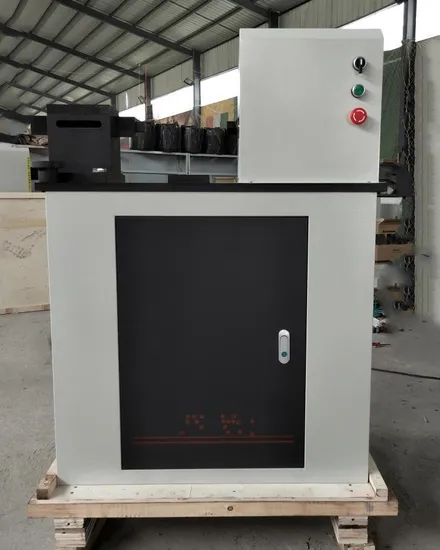
Overview
The JWL-30 is a high-strength bolt anti-slip tightening test machine. It is used mainly to tighten the axial tightening force of the anti-slip coefficient test piece, so that the operator can complete the preparatory work for the slip-coefficient test easily and quickly, improving work efficiency and reducing the burden on the operator. The machine adopts motor loading, gear transmission and universal adjustment, and it is not affected by the external dimensions of the test piece.
The machine prepares the bolted assembly that the slip-coefficient test then measures, so it sits in the same laboratory as an anti-slip coefficient detector. The universal transmission unit and the expandable work bench let the tester be positioned and the work bench extended so that the tightening machine and the detector work as one arrangement rather than as two separate operations.
Technical Specifications
| Parameter | Value |
|---|---|
| Purpose | Tightening of the axial tightening force of the anti-slip coefficient test piece before the slip-coefficient test |
| Loading method | Motor loading, gear transmission and universal adjustment; not affected by the external dimensions of the test piece |
| Tightening bolt specifications | M16-M30 |
| Tightening speed | 1-4 rpm |
| Deceleration variable-force assembly | Tightening variable 1/20 rpm; output torque 70 times; output tightening speed 1-4 rpm |
| Maximum torque | 2000 Nm |
| Universal transmission unit | X, Y cross adjustment for accurate positioning of the test piece and the power source |
| Expandable work bench | Can be combined with the anti-slip coefficient detector |
| Installation environment | No corrosive medium and no vibration; supply voltage fluctuation within ±10% of the rated voltage |
| Safety | Grounding safety protection device required; safety and fire-prevention measures around the hydraulic oil |
| Maintenance | Wipe and oil the track at least once a month; change the oil every six months in frequent use and clean the tank, oil filter and screen with kerosene before refilling |
Purpose and working sequence
A slip-coefficient test measures how much of the tightening force is carried by friction rather than by the joint, and it can only be meaningful if the bolted assembly has first been tightened to a known axial force. The JWL-30 does that preparation: it tightens the test piece so that the operator can then run the slip-coefficient test on an assembly that has been brought to the required condition. Because the machine is loaded by motor through a gear transmission and adjusted universally, the tightening does not depend on the external dimensions of the test piece, so a range of joint sizes can be prepared on the same machine.
The machine is used with high-strength bolts in the M16 to M30 range, with a tightening speed of 1 to 4 rpm. That low, controlled speed is what makes it a preparation machine rather than a production driver: the assembly is brought up slowly so the axial force can be developed and monitored in a controlled way.
Transmission and maximum torque
The drive passes through a deceleration variable-force assembly that reduces the tightening variable to 1/20 rpm and multiplies the output torque by 70 times, so the output tightening speed of 1 to 4 rpm is produced at a maximum torque of 2000 Nm. This is what allows a standard motor to develop the turning effort that a large high-strength bolt requires while keeping the rotation slow and steady.
The universal transmission unit uses X and Y cross adjustment to position the test piece and the power source accurately, so the tightening force is applied along the bolt axis rather than at an angle. The expandable work bench can be perfectly combined with the anti-slip coefficient detector, which turns the tightening machine and the detector into one workstation and avoids moving the tightened assembly between two benches.
Installation, use and maintenance
The machine should be used in an environment with no corrosive medium and no vibration, and the fluctuation of the supply voltage should not exceed ±10% of the rated voltage; the electrical equipment must have a grounding safety protection device, and because hydraulic oil is used there should be safety and fire-prevention measures around the machine. Before use the operator checks that the machine is stable and the connecting parts of the test piece move freely, that the motor runs normally and that each stage of the brake switch is effective, and the test piece is wiped clean and inspected for obvious defects that could affect the test value.
Maintenance is straightforward: keep the inside and outside of the machine clean and free of corrosion, check that the track is clean and wipe and oil it at least once a month, and in frequent use change the oil every six months, cleaning the oil tank, oil filter and oil filter screen thoroughly with kerosene before refilling with clean oil. If the oil becomes too turbid to use it should be replaced immediately.
Frequently Asked Questions
What is the JWL-30 used for?
It tightens the axial tightening force of an anti-slip coefficient test piece, so the operator can quickly complete the preparation for the slip-coefficient test; it is used with high-strength bolts in the M16-M30 range.
What is the tightening speed and maximum torque?
The tightening speed is 1-4 rpm, and through the deceleration variable-force assembly the maximum output torque is 2000 Nm, with the tightening variable reduced to 1/20 rpm and the output torque multiplied by 70 times.
How is the test piece positioned?
A universal transmission unit uses X and Y cross adjustment for accurate positioning of the test piece and the power source, and the machine is not affected by the external dimensions of the test piece.
Can it work with an anti-slip coefficient detector?
Yes. The expandable work bench can be combined with the anti-slip coefficient detector so that tightening and slip-coefficient testing are carried out on one workstation.
What are the installation and maintenance requirements?
Use it without corrosive medium or vibration, keep the supply voltage within ±10% of rated, fit grounding protection and fire-prevention measures for the hydraulic oil, oil the track at least monthly and change the oil every six months in frequent use.
Related Products & Pages
About CHENJI & Support
CHENJI is the brand of Jinan Chenji International Trade Co., Ltd. (Shandong, China), a manufacturer and exporter of material testing machines since 2014, with in-house quality control plus third-party inspection by SGS or Bureau Veritas. The company holds ISO 9001 certification (626024QH073R1) and is a Bureau Veritas audited supplier (MIC-ASR2451820). Testing machines are normally supplied with a calibration certificate valid for 12 months and traceable to national force standards, and our engineers help you select the machine, fixtures and accessories for your specimen and method.
Every quotation is prepared against the standard you test to, so the delivered machine matches the test method rather than only the headline capacity. Spare parts, consumables and calibration support are available after delivery, and machines can be produced to OEM or ODM requirements when a customer drawing or specification is provided.
Selecting and Verifying a Testing Machine
Choosing a machine is a matter of matching capacity to the specimen and the method, not of buying the largest frame. A 1000 kN machine is not suitable for a sample that needs 1 N of force; capacity selection follows the specimen and the standard, and the force measuring system should be verified per ISO 7500-1 or ASTM E4 on a regular schedule. Load cells are commonly supplied as class 0.5 or class 1, which means the indicated force stays within ±0.5% or ±1% of the true force.
Test results are only comparable when they are quoted together with the standard, the specimen geometry, the test speed and the force measurement class. We are glad to review your test method and specimen so that the machine, fixtures and accessories are correctly specified before you order.
Request a Quotation
Tell CHENJI the bolt size and the tightening force you need to develop, and we will confirm the JWL-30 anti-slip tightening test machine and its compatibility with your slip-coefficient detector for a quotation.
Email annie@chenjitester.com or call / WhatsApp +86 158 5311 1612.